
Students say classrooms are too crowded, support is stretched, and learning is suffering
Students are acutely aware of class size pressures in their schools and are experiencing the consequences in their daily learning.
Article originally published by Abacus Data.
New national research conducted by Abacus Data on behalf of the Canadian Teachers’ Federation (CTF/FCE) finds that students are acutely aware of class size pressures in their schools and are experiencing the consequences in their daily learning. Parents see the same challenges and report impacts extending beyond the classroom into family life.
For the past several years, Abacus Data has been tracking Canadians’ views about public education on behalf of the CTF/FCE. In order to gain a fresh perspective on the public education sector since last fall, we conducted some new research specifically with parents and youth. This research paints a clear picture: many believe classrooms are overcrowded, schools lack sufficient staffing supports, and these pressures are affecting both learning outcomes and student well-being.
The findings reveal that students are not only noticing large class sizes, but they are also feeling the effects directly. Parents, meanwhile, report seeing consequences in their children’s learning experiences, behaviour, stress levels, and family dynamics.
Students recognize staffing shortages and crowded classrooms
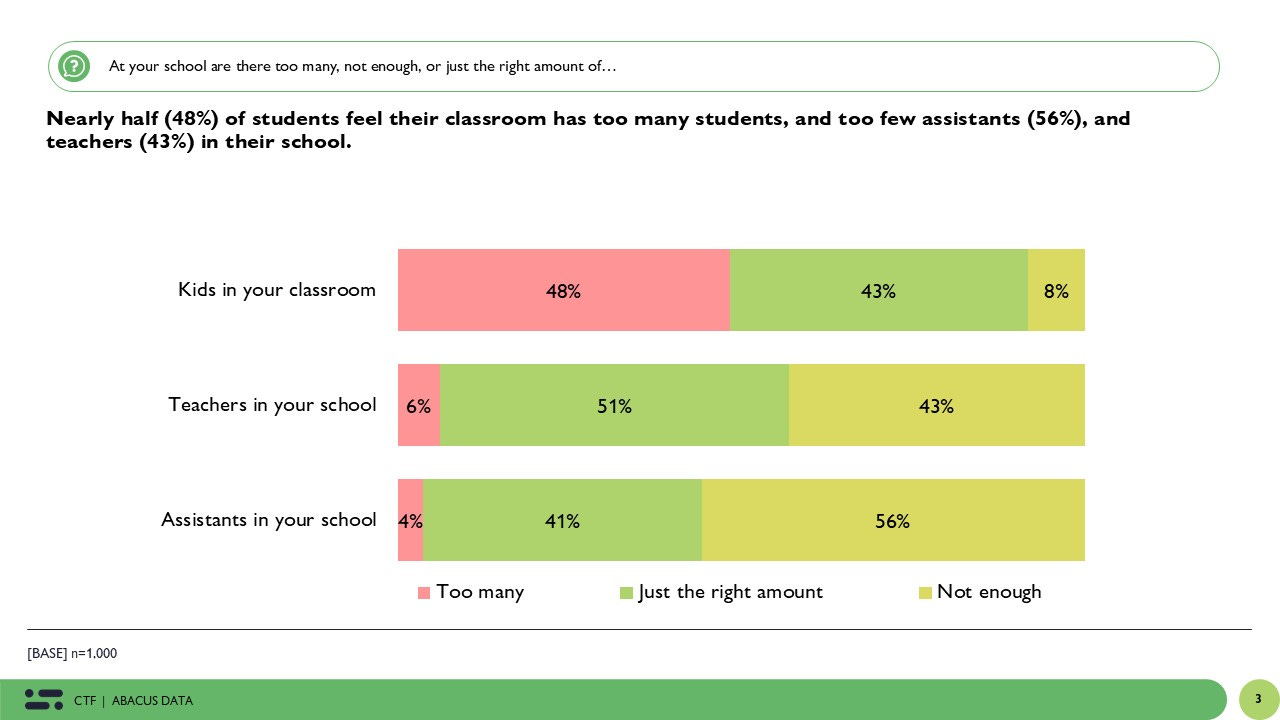
Nearly half (48%) of students say there are too many students in their classroom. The concern is even more pronounced among secondary students, where a majority (55%) believe their classes are too large.
Students also perceive significant staffing shortages within their schools. More than half (56%) say there are not enough educational assistants or support staff available, while 43% say there are not enough teachers.
Taken together, nearly three quarters (73%) of students identify at least one major imbalance in student-to-staff ratios at their school, suggesting that concerns about classroom capacity and staffing are widespread rather than isolated.
Large class sizes make learning more difficult
The impact of crowded classrooms appears substantial.
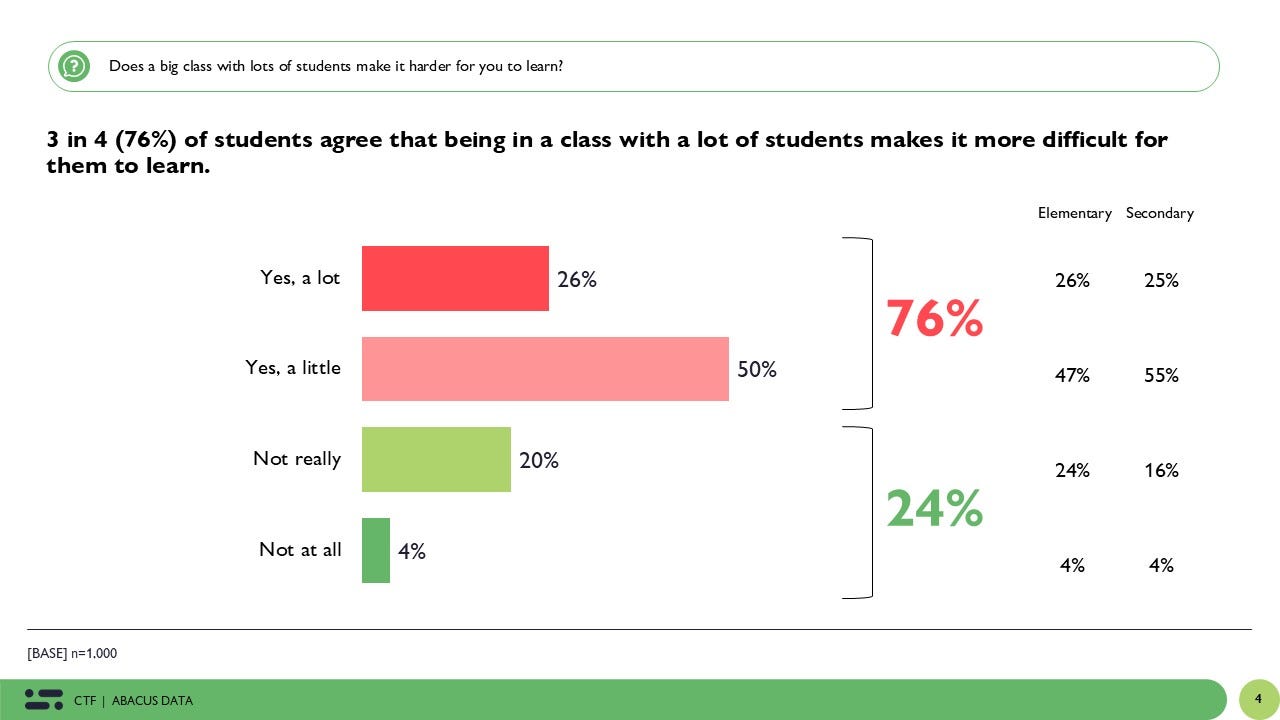
Three-quarters (76%) of students agree that being in a class with a lot of students makes it harder for them to learn. One in four (26%) say it affects their learning “a lot.”
Secondary students report feeling the impact more strongly than younger students. More than half (55%) of secondary students say large classes make learning at least “a little” harder, compared with 47% of elementary students.
These findings suggest that students see class size not simply as an administrative issue, but as something that directly affects their ability to succeed in school.
Students believe teachers are stretched thin
Students also recognize the challenges educators face in increasingly complex classrooms.
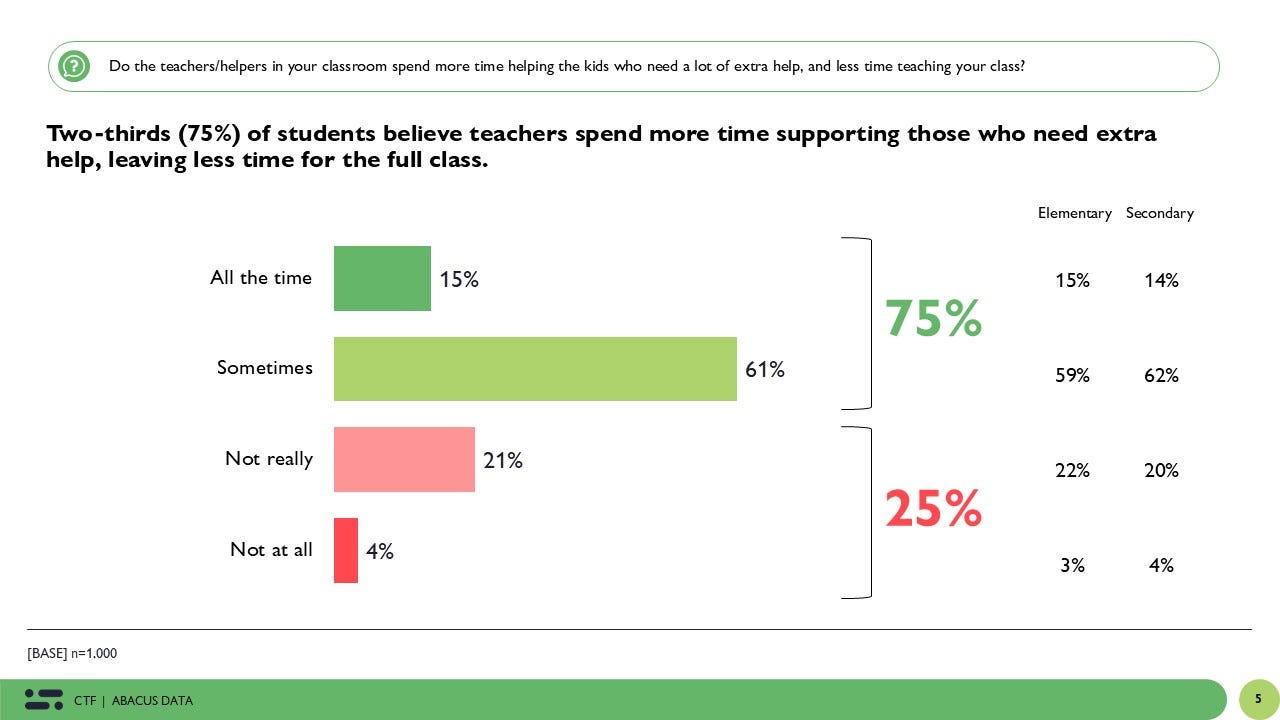
Three-quarters (75%) believe teachers and classroom support staff spend more time helping students who require significant additional support, leaving less time available for teaching the class as a whole.
Only one-quarter (25%) disagree.
This finding highlights the difficult balancing act many educators face. As student needs become more complex, students themselves appear to notice that limited staffing resources can affect how much attention is available across the classroom.
The consequences extend beyond academics
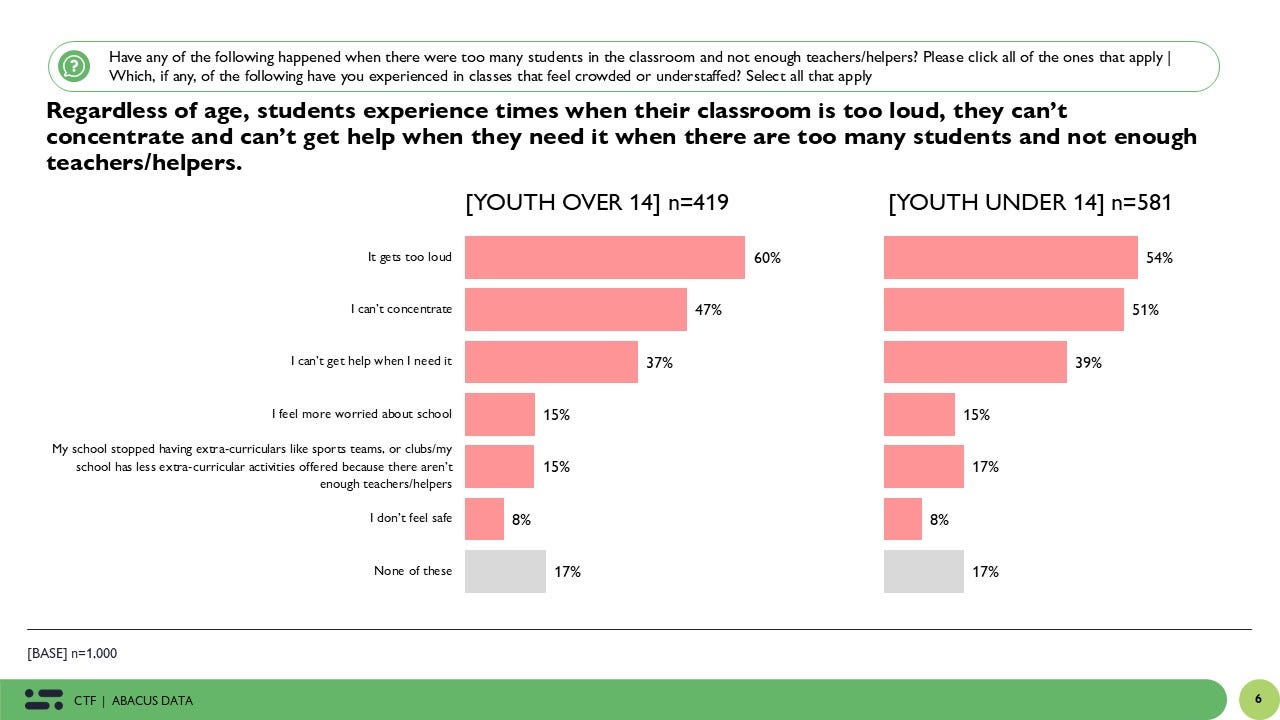
Students report experiencing a range of challenges when classrooms feel crowded or understaffed.
Among those surveyed:
- 60% say classrooms become too loud.
- 47% say they have difficulty concentrating.
- 37% say they cannot get help when they need it.
- 15% say they feel more worried or stressed about school.
- 15% report fewer extracurricular opportunities because there are not enough staff available.
- 8% say they feel less safe.
Overall, 83% of students report experiencing at least one negative consequence linked to large classes or insufficient staffing.
The findings suggest that classroom pressures affect more than academic performance alone. Students describe impacts on concentration, access to support, extracurricular opportunities, and overall school experience.
Parents see the consequences too
Parents largely confirm what students are reporting.
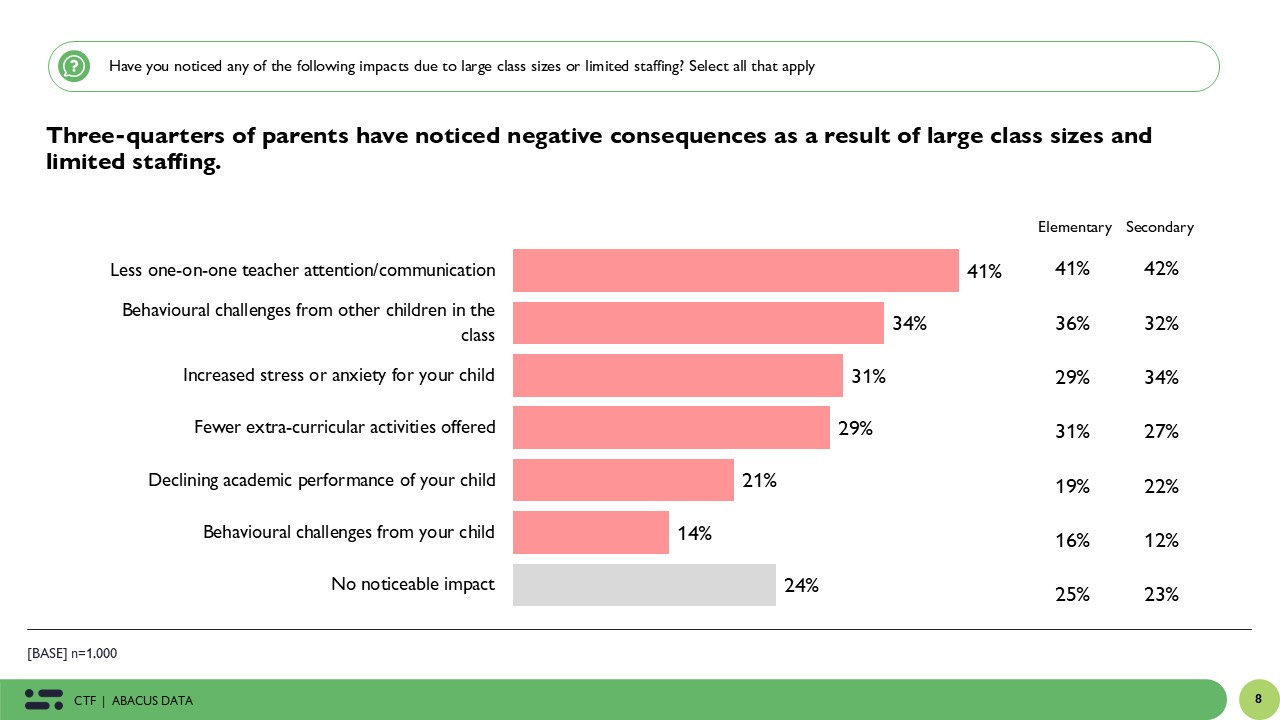
Three-quarters (76%) say they have observed negative impacts on their child resulting from large class sizes or limited staffing.
The most common concerns include:
- Less one-on-one attention and communication from teachers (41%).
- Behavioural challenges from other students in the classroom (34%).
- Increased stress or anxiety for their child (31%).
- Fewer extracurricular opportunities (29%).
- Declining academic performance (21%).
Only 24% report noticing no impact.
These results suggest that concerns about classroom capacity are visible not only to students and educators, but also to families observing the effects at home.
The impact reaches into family life
Parents report that the effects of large class sizes extend beyond the classroom and into their daily lives.
More than half agree that:
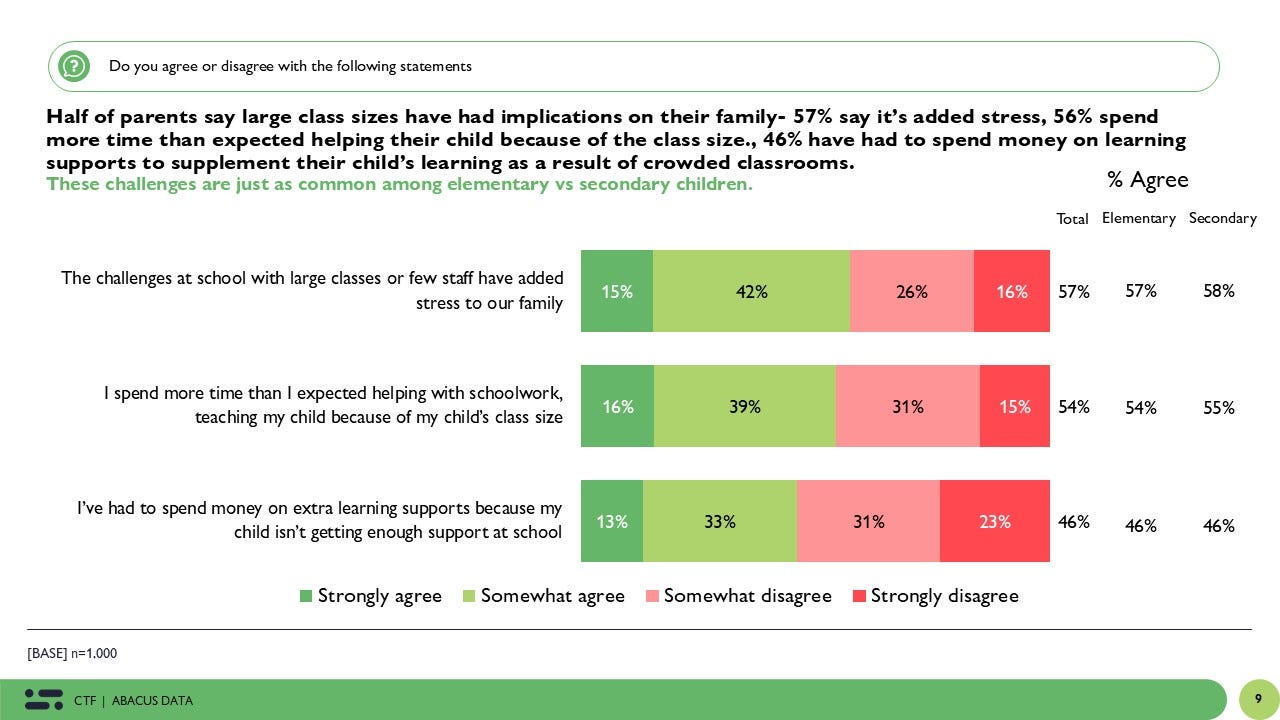
- Challenges at school have added stress to their family (57%).
- They spend more time than expected helping their child with schoolwork because of class size pressures (56%).
Nearly half (46%) say they have spent money on additional learning supports because their child is not receiving enough support at school.
These findings indicate that when schools struggle with staffing and classroom capacity, the consequences are often absorbed by families as well.
The Upshot
Students and parents are sending a consistent message: classroom overcrowding and staffing shortages are affecting learning experiences across the country.
Students notice when classes are too large. They report more difficulty learning, reduced access to help, louder classrooms, and fewer opportunities. At the same time, they recognize that teachers and support staff are working to meet increasingly complex student needs with limited resources.
Parents see many of the same consequences. They report reduced access to individualized attention, increased stress for their children, and growing impacts on family life.
The findings suggest that discussions about class size are not simply about numbers. For many students and families, they are about the quality of the learning environment, access to support, and the conditions needed for students to thrive.
Methodology
The survey was conducted with 1,000 Canadian parents and their child (8-17) from January 12 to 20, 2026. The margin of error for a comparable probability-based random sample of the same size is +/- 3.09%, 19 times out of 20.
The data were weighted according to census data to ensure that the sample matched Canada’s population according to age, gender, educational attainment, and region. Totals may not add up to 100 due to rounding.
About the Public Education Journal
The Public Education Journal connects you to the stories, insights, and ideas shaping classrooms and communities across Canada. An initiative of the Canadian Teachers’ Federation, the voice of public education.
Join our community on Substack. Subscribe for free to receive new articles directly in your inbox.